TAFP fosters the future of family medicine
By Samantha White
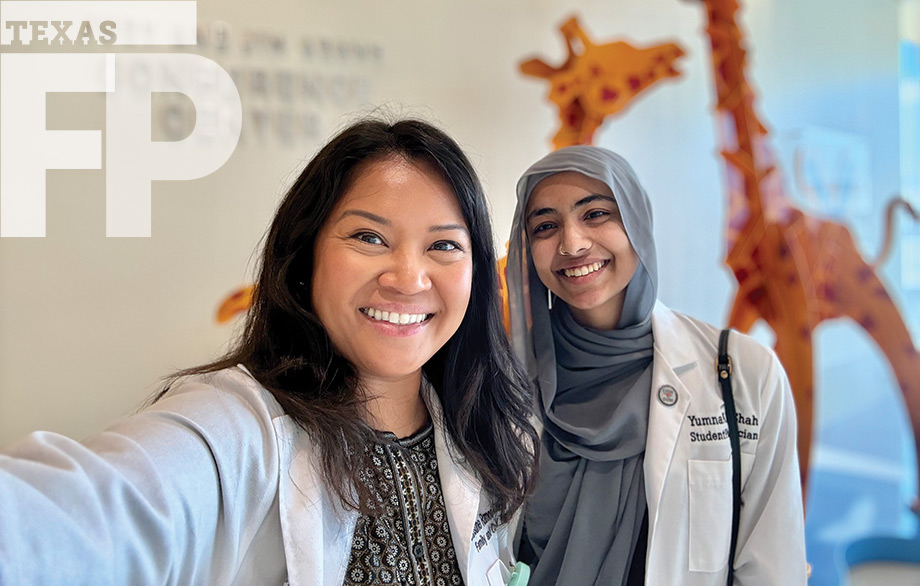
As an advocacy organization, TAFP has fought for the future of family medicine in a number of ways over the decades. From a TAFP donation to the TAFP Foundation that supports student and resident travel funding, to advocating at the Legislature for residency program funding and the Physician Education Loan Repayment Program, to launching the TAFP Student and Resident Summit in 2024, helping to build a future workforce is something TAFP is always working toward.
“The primary care shortage isn’t a future problem; it is a current crisis,” says Eric Lee, MD, who chairs TAFP’s Council on Workforce and Member Engagement. “The support that organized medicine groups like TAFP provide in supporting students and residents is significant. Although the culture of medical education is changing, at many medical schools, students are pushed toward higher-paying, procedure-heavy specialties. TAFP helps showcase the importance of family medicine to students as well as the profound impact, intellectual variety, and meaningful patient relationships a career in family medicine can provide.”
And while the news can make the future of family medicine and healthcare in general seem doom and gloom, there are certainly bright spots. “The future of family medicine is bright,” Lee says. “If you look at the headlines — the administrative burden of electronic health records, the insurance battles — it’s easy to feel anxious about the future. But when you work in academics and interact with actual people entering the field, it is impossible not to feel incredibly hopeful.”
The Academy works hard to help build the specialty’s workforce. Keep reading for some of our most notable student and resident efforts.
Student and resident events
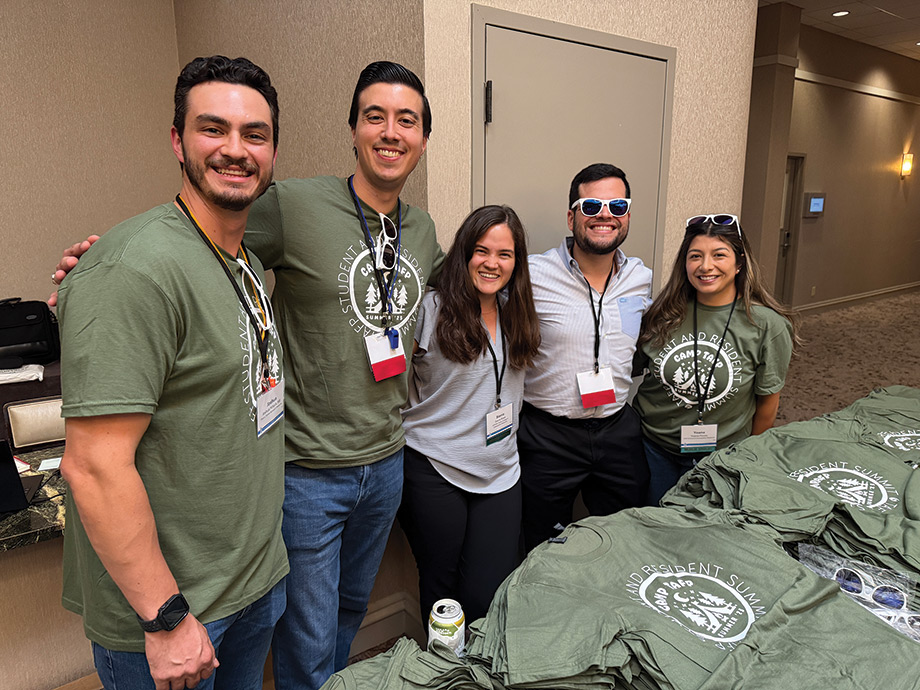
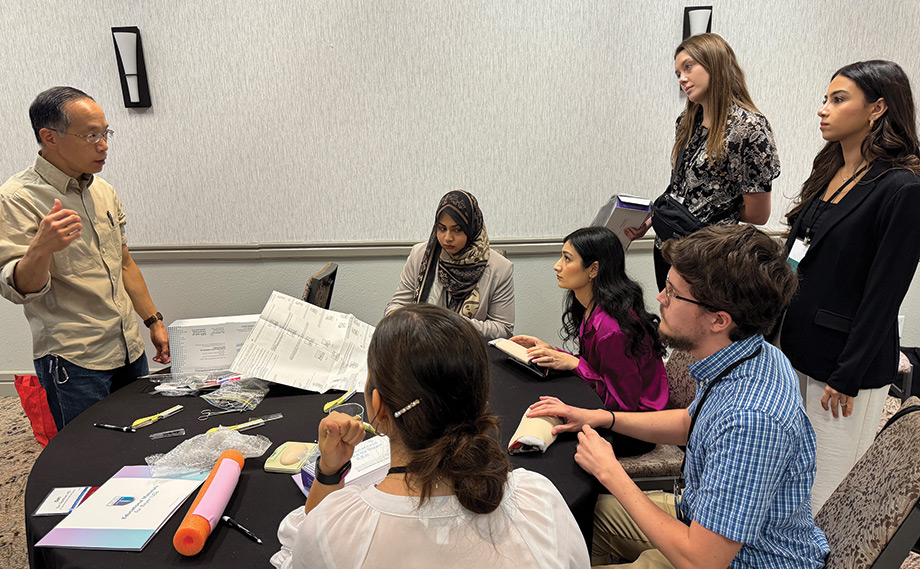
After years of holding specialized student and resident tracks at our C. Frank Webber Lectureship and Primary Care Summit, the timing was right in 2024 to launch an annual event for only the students and family medicine residents of Texas. The TAFP Student and Resident Summit is held every August with TAFP members and other professionals speaking on topics like financial wellness, contracts, family medicine career paths, tips from new physicians, building trust with patients, and more. There is also time for networking, a procedural workshop, and a Residency and Career Fair.
TAFP staff attend AAFP’s National Conference for the Future of Family Medicine, also called FUTURE, to network with the state’s residency programs in attendance, as well as throw an evening social for all Texas attendees. Residency programs can also invite medical students they are trying to recruit as another opportunity to chat about family medicine in Texas.
The annual Research Poster Competition promotes scholarly activity, providing students and residents with a unique opportunity to share research with the wider TAFP membership. Participants are invited to attend Annual Session and Primary Care Summit each fall to display their work and get feedback in live time from CME attendees. Student winners receive plaques and resident winners receive cash prizes, with the top overall resident also receiving travel funding for a national research conference of their choosing.
Funding
The TAFP Foundation supports funding for students and residents in a number of ways. Travel funding is provided for student and resident officers to attend a number of meetings and events, for poster competition participants to attend ASPCS, for three medical students per school and one resident per program to attend TAFP’s Student and Resident Summit, and for medical students to attend AAFP FUTURE. The foundation also offers scholarships, support for family medicine interest groups, and research grants.
The TAFP Foundation also launched the Texas Family Medicine Scholars Program to recognize and further develop the leadership skills of Texas family medicine residents. Two scholars are chosen during their first year of residency, each receiving a total of $10,000 to be paid throughout their residency. They are paired with a mentor, receive travel funding to attend TAFP meetings, and develop a project or presentation during the program to further the goals of TAFP or the TAFP Foundation. The goal of the scholarship is to develop a series of leaders who will continue to give back to their specialty and community. Since its inception in 2020, the initiative has supported 12 residents throughout their training.
Other support and opportunities
The Texas Family Medicine Preceptorship Program matches first- or second-year students enrolled in a Texas medical school with an experienced and skilled family physician for a two- to four-week period to help them gain real-life experience in a community setting. By participating in our preceptorship program, students will have the unique opportunity to explore what it means to be a family physician. “By connecting residents and students with practicing physicians, TAFP creates a professional community before careers even fully begin,” Lee says.
As a way to stay in touch with graduating residents, TAFP collects contact information from them throughout the summer through an emailed form. In August once they are settled in post-residency, we mail graduation gifts — a box of TAFP goodies and items for them to outwardly display their love of family medicine. “The graduation gift campaign has been quite successful, reaching hundreds of soon-to-be new physicians every year,” says TAFP Membership and Workforce Development Manager Juleah Williams. “Not only does it act as a connection between TAFP and graduating residents, but it allows us to celebrate with them as they transition to their family medicine careers.”
Students and residents are invited to participate in official TAFP business as officers and board members, but also through the Resident Leadership Experience. Loosely based on the curriculum of the Family Medicine Leadership Experience, RLE is a yearlong leadership development program designed to equip family medicine residents with the skills they need to thrive in their future practice. In today’s rapidly changing environment, healthcare enterprises need leaders who can anticipate what’s coming next, make solid decisions in the face of ambiguity, and deploy their talent effectively. TAFP believes these leaders should be well-trained family physicians and the RLE program helps to build those leaders up.
TAFP staff and leaders host a number of webinars aimed at students and residents each year — a welcome to Texas webinar for family medicine residents new to the state, a transition to practice webinar for recently graduated residents, an orientation webinar focused on efficiently planning for AAFP’s FUTURE conference, and others.
New physician Madeline Hazle, MD, has been a very active TAFP member since medical school. She initially joined to learn more about the specialty, but stuck around because of the people.
“What kept me involved was the opportunity to connect with physicians, residents, and students from across Texas who were passionate about patient care and advocacy,” she says. “I encourage students and residents to be active in TAFP because it offers opportunities that complement their medical training. TAFP helps ensure that future physicians are prepared not only clinically, but also as leaders who understand healthcare policy, physician wellness, practice management, and patient advocacy. By investing in students and residents, TAFP strengthens the future of family medicine and helps create a healthcare system that can better serve patients across Texas.”