My first patient’s final gift
By Benji Popokh, MD
I remember the first time I saw her eyes. They were blue, like mine. They stared up at the ceiling, and I thought, doesn’t she need to blink? She lay perfectly still, unaware of my presence. Two other students were with me, and we silently looked up at one another across the patient. Without uttering a single word, we came to the same conclusion. She’s dead. She once lived, and now she’s gone.
I was the first to pick up the scalpel. Is everyone ready? We all drew our breaths. We’d been studying, preparing, anticipating this moment for years. Yes. We think so. It seemed simple enough in the textbook.
Okay. I exhale softly and make the first cut. The hand that I expected to tremble is calm. I hold the scalpel like a pencil and cut straight down. Not too shallow, and not too deep. Where is all the blood? Why doesn’t she cry out? I shake the childish thoughts out of my head.
We have a few hours to reveal, explore, and identify. Muscles, nerves, arteries, veins. Cut, reflect, scissor, and remove the fat. I look back and I see one of my partner’s hands resting on the patient’s shoulder. I pause. Is everything alright, they ask. I blink away the wetness that suddenly wells in my eyes. Yes. Let’s continue.
The next day, we return to our patient. She remains as motionless as the last time we visited, yet I feel that she is expecting us. Yesterday’s incisions lie open, and I almost feel shy peering inside. We continue to reveal the innermost aspects of our patient, growing more confident over time. We adjust the patient, we raise her arms and legs, we turn her shoulders and hips. It begins to feel right. I no longer notice the smell. Yet I know it lingers about me. On weekends, with my family, with my friends, and with strangers, I know they notice. What exactly is it they see or smell about me? I don’t let myself consider the question. Not yet.
On our last day in the cadaver lab, I look over the patient. She’s unrecognizable. She has been dissected in every possible orientation, and each of her organs has been exposed. My partners look at me. Are you ready to cover her up? I glance at her one remaining eye. It’s still as blue as the day I met her. Yes, I say, meeting their stares. But first, I lay a hand on our patient’s shoulder and return my attention to her. We should thank her. We stand as silently as our patient lies and we reflect. After a moment, I cover her up.
What was it that brought tears to my eyes on that first day? It was the recognition of the gift our patient had given us. When my partner touched her shoulder, he touched a part of her that was once held in life. As we felt her hand, she too had a mother, father, lover, and a child. As we beheld her eyes, so too did she once gaze upon life. As we explored her heart, so too did her heart once explore the world. She gave us her first breath, and her last. She gave us every memory, every joy, and every sorrow. She gave us everything that remained to her in the end, and she didn’t even know our names.
I’ll never be able to truly thank my first patient for the gifts she offered. What I promise to do, however, is to remember her. I will give her the gift of immortality through my thoughts and actions. I will be a doctor who recognizes each patient for their individual humanity, and I will treat each with as much love as my first patient.
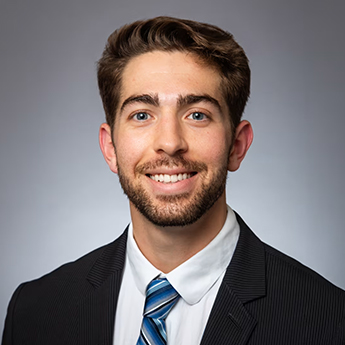
Benji Popokh, MD, is a first-year resident at the JPS Family Medicine Residency Program in Fort Worth as well as a 2025 Pisacano Scholar. He publishes personal writing at substack.com/@benjipopokh and plans to practice full-spectrum family medicine including obstetrics after completing residency.