If not me, then who?
For Emily Briggs, MD, MPH, TAFP’s 2025 Family Physician of the Year, every opportunity to improve a patient’s life is another opportunity to practice family medicine.
By Jonathan Nelson
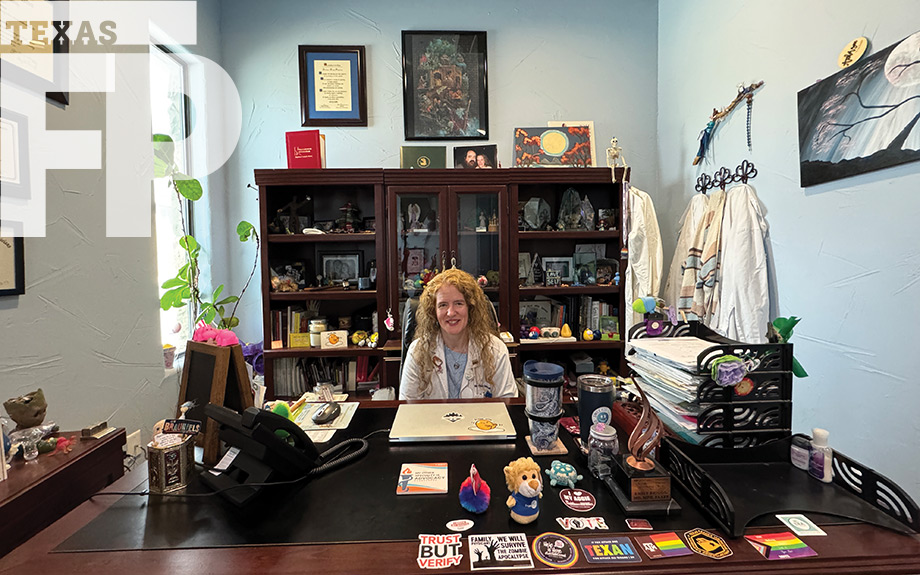
“If not me, then who?”
Emily Briggs, MD, MPH, doesn’t hesitate when giving this response. She’s explaining why she spends evenings at committee meetings after a full day in clinic. Why she testifies before lawmakers. Why she answers reporters’ calls when maternal health becomes a national story. Why she keeps saying yes to one more responsibility when her schedule already seems impossibly full.
To Briggs, those aren’t separate jobs competing with the practice of medicine. They are the practice of medicine.“I was very clear about what my vision was,” she says. “I had this interdisciplinary model in mind from my fellowship.”
“If those of us who have the opportunity — who have the privilege to make the world a better place — don’t do that, why do we exist?” she asks. “The purpose of living is to be in community, and a community member does best for the community by helping lift everybody.”
Spend enough time with Briggs, and you’ll notice that she doesn’t draw a line between caring for one patient and caring for thousands. One day, that means delivering a baby in New Braunfels. Another day, it means helping a medical student discover what kind of physician they want to become. On another day, it means standing before a legislative committee to explain how a policy will affect the women and families she knows by name.
The setting changes. The calling does not.
That philosophy has guided her through more than 16 years of practicing full-spectrum family medicine, including operative obstetrics, while becoming one of the most respected physician leaders in Texas. It has shaped her service to local hospitals, school districts, organized medicine, and maternal health initiatives. It has helped her earn the trust of colleagues across the state, who have repeatedly asked her to lead — not because she sought the spotlight, but because they knew she would never lose sight of the patient.
It is also why the Texas Academy of Family Physicians named Emily Briggs its 2025 Texas Family Physician of the Year, recognizing a career defined not only by clinical excellence, but by service to patients, communities, and the profession of family medicine.
Yet if you ask Briggs how she got here, she won’t talk about awards or leadership positions. She’ll probably tell you she couldn’t make up her mind.
“I liked everything,” she says, recalling her third-year medical school rotations. Pediatrics convinced her she should become a pediatrician. Surgery made her think she belonged in the operating room. Internal medicine fascinated her. Obstetrics offered continuity, procedures, and the privilege of delivering babies.
Each new rotation seemed to reveal the specialty she was destined to pursue. Her family medicine rotation came last.
“I thought, ‘Oh … so I can do everything,’” she says. “‘I can do surgeries, I can have continuity with my patients, I can see them in the hospital and in the office, I can take care of the baby as well as the mom. I can deliver that baby. Yes, this is what I want to do.’”
Saying “yes” is what you can expect from Emily Briggs, and family medicine has offered her myriad opportunities to say “yes.”
Early in her medical training, someone gave her advice that would become one of the defining principles of her career. Always say yes.
Briggs credits those three simple words with opening doors she never could have planned for herself. By saying yes, she learned to care for the sickest patients, to embrace uncertainty, and to discover that family medicine was far broader and far more rewarding than she had imagined.
“By me saying yes to everything,” she says, “I got exposed to so many opportunities.”
That willingness to say yes would lead her to open an independent practice in New Braunfels, deliver more than a thousand babies, mentor dozens of medical students, serve as president of TAFP, and become one of Texas’ leading voices on maternal health.
“I thought, ‘Oh, so I can do everything. I can do surgeries, I can have continuity with my patients, I can see them in the hospital and in the office, I can take care of the baby as well as the mom. I can deliver that baby. Yes, this is what I want to do.’”
After earning her biology degree from Texas A&M University, Briggs completed both her medical degree and Master of Public Health at UT Houston before training at the Christus Santa Rosa Family Medicine Residency Program in San Antonio. Since opening Briggs Family Medicine in 2009, she has remained committed to practicing the broadest possible scope of family medicine while continually seeking new ways to improve care for her community.
She delivers babies, performs cesarean sections, rounds on hospitalized patients, provides preventive care, manages chronic disease, and cares for multiple generations of families. At a time when many physicians have narrowed their scope of practice, Briggs has intentionally chosen to expand hers.
“She provides comprehensive care for all ages and knows her patients extensively,” wrote family physician Erin Wright, MD, in her nomination letter. “She continues to practice FMOB and manages her own patients when acutely ill and hospitalized in a time when most primary care physicians have transitioned to exclusive clinic work.”
Her commitment to maternal health has become one of the defining threads of her career.
In 2024, the American College of Obstetricians and Gynecologists named Briggs an honorary fellow — an uncommon distinction recognizing her extraordinary contributions to obstetric care despite not being an obstetrician-gynecologist. The honor reflected years of work advancing maternal health in Texas, particularly in rural communities where access to obstetrical care continues to decline.
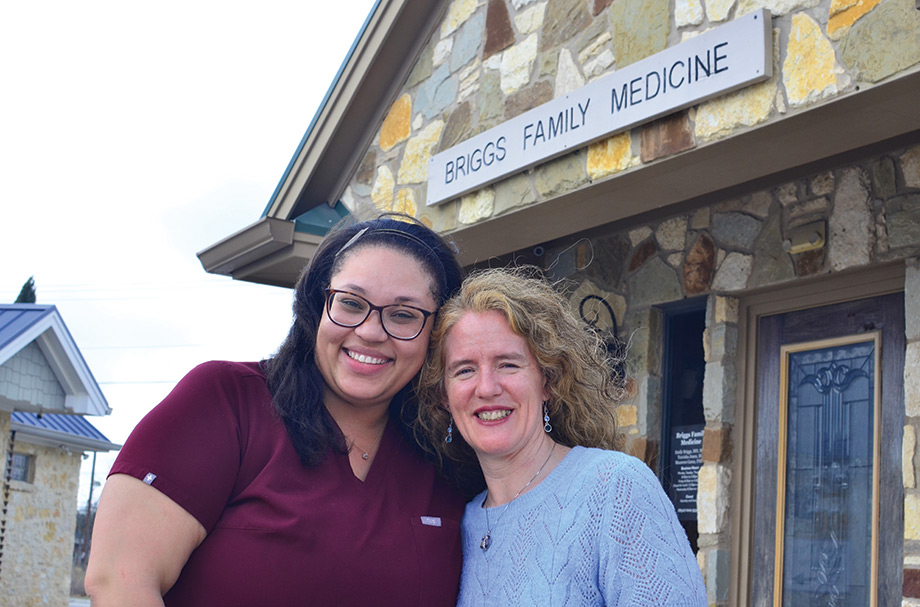
Yet awards have never been the goal. For Briggs, obstetrics represents one of family medicine’s greatest privileges: being present at the beginning of a family’s story.
A wall in her clinic is covered with photographs of kids she’s delivered, and her smile beams as she tells stories of these patients and friends. They comprise such an important part of the tapestry of her life in family medicine, a life that includes building a practice, raising a family, supporting and leading professional organizations, mentoring students, and advocating for patients across Texas and the nation.
Along the way, Briggs has received guidance from many mentors who challenged, encouraged, and inspired her. Mentors who showed her not only how to practice family medicine, but how to imagine what the specialty could become.
Three were faculty members at her residency program: James Martin, MD; Leah Raye Mabry, MD; and Larry Karrh, MD. Each shaped a different part of the physician she would become.
Martin taught her to think beyond the immediate problem — to imagine not just where family medicine was, but where it could be. Mabry demonstrated that conviction and compassion were never mutually exclusive. Karrh showed her that confidence wasn’t about having every resource at hand. It was about trusting your training, solving problems creatively, and never letting uncertainty keep you from caring for the patient in front of you.
Those mentors gave Briggs a sense of confidence, and they came at just the right time for her, because medical school hadn’t been a walk in the park.
“It was the worst time of my life,” she says. The pressure, the constant comparison, and the feeling of never being good enough left Briggs feeling defeated. “You are trained into imposter syndrome in medical school.”
That experience changed the kind of teacher she wanted to become. As a faithful participant in the Texas Family Medicine Preceptorship Program, Briggs often hosts medical students completing their rotations. Rather than expecting every learner to fit the same mold, Briggs tries to understand what each student needs.
“I tend to bend to what their experience is and what they need as individuals,” she explained. “I want to make sure that I’m helping them in a way that is helpful to them.”
Elysse Reyes, MD, experienced that philosophy from the moment she arrived for her rotation in her third year of medical school. Before discussing schedules or expectations, Briggs asked a question Reyes had never heard from another preceptor.
“What do you want this experience to look like?”
It was a simple question that left a lasting impression on Reyes. During the rotation, Reyes accompanied Briggs in the clinic, hospital rounds, deliveries, caesarean sections, county medical society meetings, and even community outreach meetings during a local measles outbreak.
She expected to learn medicine, but she learned something more. She learned how family medicine feels.
She watched Briggs explain every step before beginning a pelvic examination. She noticed the fuzzy socks available for patients whose feet rested in cold stirrups. She watched her pause long enough to answer every question, no matter how busy the day became.
Sometimes Briggs even sang quietly to help anxious patients relax, Reyes wrote in a nomination letter. None of those gestures appeared in a clinical guideline. None affected billing codes or quality metrics. Yet together they revealed a physician who understood that dignity is every bit as important as diagnosis.
“Everything she does for her patients is done with great and deliberate care,” Reyes wrote. “Every movement, every word, and every charted note is done with the patient in mind.”
By the end of the month, Reyes realized she had learned far more than procedures or treatment algorithms.
“I had spent the majority of my third year learning medicine,” she wrote. “But with Dr. Briggs, I learned the art of medicine.”
“I joke that she is out to ‘save the world’ whenever she has a meeting with the AMA or TAFP, because I feel she literally is doing just that. She will fight for the rights of her patients and their care as well as that for physicians. Not all heroes wear capes. Some wear white coats.”
Briggs still remembers the first TAFP meeting she attended as a medical student. A classmate told her there would be representatives from residency programs and family doctors from around the state, and there would be free registration, a hotel room, and maybe even a stipend to help cover expenses.
“Sure,” she thought. “Why not?”
For the first time, she saw physicians debating public policy, wrestling with scientific evidence, mentoring students, and working together to improve the health of communities they might never personally visit. She was invited to sit in committee meetings. People wanted to know what a medical student thought. They listened and they welcomed her into conversations she hadn’t imagined herself joining.
“I fell in love with organized medicine from that very first meeting,” she says. She has been saying yes ever since.
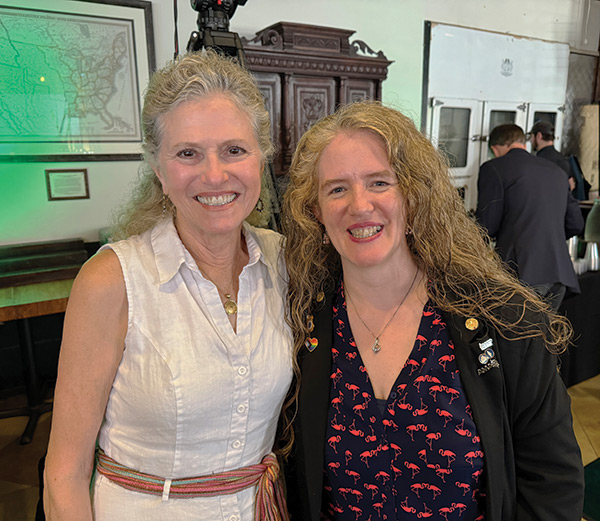
Helen Kent Davis is the founder and principal of HKD and Associates, a healthcare policy consulting firm, and for many years she served as a senior health policy expert for the Texas Medical Association. She remembers meeting Briggs nearly 15 years ago at a meeting of TMA’s Select Committee on Medicaid, CHIP, and the Uninsured. Briggs wasn’t even a committee member. When public testimony began, she stood to speak — not about policy, but about people.
She told stories of patients who borrowed neighbors’ cars just to make it to an appointment. Parents who wanted to follow medical advice but couldn’t afford another prescription. Young mothers working multiple jobs while trying to manage chronic illness and raise children. Somehow, despite the relentless pace of family medicine, Briggs had learned their stories, and she carried those stories with her into the policy arena.
“Her comments were not about abstract patients, but real people,” Davis wrote. “The stories she shared helped some of her more jaded colleagues in the room see Medicaid patients as people, not just ‘the poor.’”
Over the years, Briggs has served in virtually every level of physician leadership — from local medical societies to TAFP, the American Academy of Family Physicians, the Texas Medical Association, and the American Medical Association. She has chaired committees, led chapters, represented Texas physicians nationally, and helped shape policies affecting patients across the country.
For her, dedication to organized medicine and other leadership opportunities isn’t about accolades or status. Instead, leadership has always been another way to care for patients.
The founder of the Texas Campaign for Mothers, Libby McCabe, witnessed the same quality during emotionally charged debates surrounding the effort to pass Senate Bill 31, the Life of the Mother Act, in the 2025 Texas Legislature. Even amid disagreement, Briggs refused to demonize those who saw the issues differently.
Instead, she remained focused on the patients whose lives depended on thoughtful solutions. McCabe admired her ability to communicate difficult truths with clarity, credibility, and compassion.
“She always struck the necessary balance of highlighting the severity of the situation and the critical need for change, without assigning partisan blame,” McCabe wrote in a nomination letter. “Her voice was incredibly impactful.”
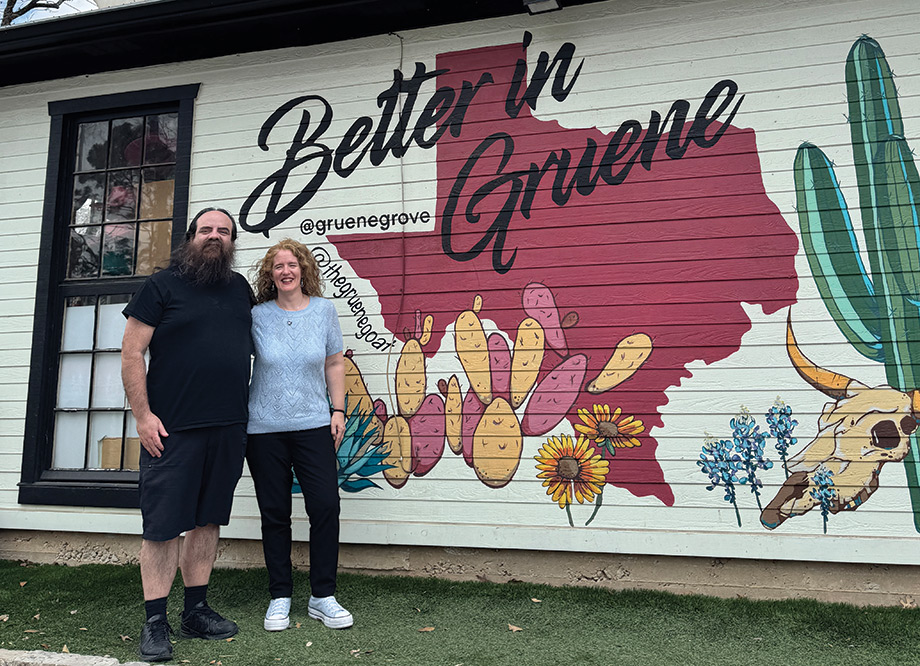
There’s so much more to tell about Dr. Emily Briggs: her love of making music, her devotion to her two children and husband (who often call her “Dr. Meetings” because she’s always running off to another conference, many times taking them along for the ride), her 2024 interview with 60 Minutes on Texas’ strict abortion laws, and the multitude of pets of every sort along the way.
As Elysse Reyes put it, Briggs is “an octopus juggling her various roles: physician healer, patient advocate, public health expert, community leader, business owner, hospitalist, obstetrician, teacher, wife, mother, and more.” Yet she carries those responsibilities not with fanfare, but with grace, humility, and what Reyes calls “a genuine love for humanity.”
By the end of the rotation, Reyes realized she had learned something she hadn’t expected.
“I knew before Dr. Briggs that I wanted to practice family medicine,” she wrote. “After Dr. Briggs, I knew how I wanted to do it.”
Just as her mentors helped shape her, Briggs demonstrates for all of us how to say yes, and how to care for our community in the exam room and out in the world. In doing so, she passes down an inheritance of purpose.
The patient who walks through the front door of Briggs Family Medicine tomorrow morning probably won’t know she is being cared for by the TAFP Family Physician of the Year. She won’t know about the committee meetings or the testimony before legislators or the national leadership positions.
She will simply know that her physician is there for her — whether the patient needs her in an exam room, a delivery room, a classroom, or the halls of the Capitol.